Also shared on Substack .
It’s been five years since I shared a public review . I write one each year with my Elephants group —but I’ve kept them private. My main theme for 2026 is creation over consumption, so in that spirit, here’s my look back.
My priorities haven’t changed: (1) health, (2) family, (3) work/impact. In that order, because each is an input to the next. I can’t show up for family if I’m not taking care of myself, can’t do meaningful work if things at home aren’t in good shape. I’ll tackle them in reverse.
Work and impact
The most obvious change this year is how I work. At the start of the year my tools were pretty typical for a product leader: Docs, Slack, Figma, Metabase, and heaps of Zoom. Now I spend almost all of my working hours in Cursor and Claude Code, commanding other tools through those interfaces, writing in markdown instead of docs. I’m in dozens of repos (vs 1-2 at the start of the year). It’s staggering how much has changed when I step back and look at it. The acceleration feels like it’s only picking up.
5 years at ClassDojo
I joined ClassDojo during covid lockdowns, and every year has felt very different. It’s so much fun working with a small group of talented people on problems that matter, at scale. Our mission is to give every kid on earth an education they love, and 45 million kids engage with products we’ve built every month. Given this scale, we’re a tiny team, which means massive impact and ownership per person.
In that time, we’ve transitioned from a single-product (classroom communication) to a multi-product company. Two I’m especially proud of: Sparks , which is the best product for teaching kids to read in 2026, and Dojo Islands , a playground for agency and creativity that my two eldest girls play weekly.
This year I shifted my focus from leading product teams that drive revenue, to thinking about what moves the trajectory over the next few years. A big part of this is our AI strategy, and changing the ways we work (ie, avoiding innovators dilemma, as a +10yo company). This has got me thinking about moats and defensibility, when software is commoditized. While someone could probably replicate core functionality pretty quickly, a few things are very hard to copy: brand, distribution, and network effects that bring people together in deeply human ways. In our space, ClassDojo has unique assets on all those dimensions.
Personal mission
I turned 40 last year, and it got me thinking about the kind of impact I want to have in the next decade. I have three kids at formative ages (10, 8, 2), all interacting with technology in different ways. And I kept coming back to a question I couldn’t shake: what is the world they’re growing up into, and what’s it going to take for them to thrive in it?
I started talking to parents of older kids about decisions like college, and high-school options. Entire job categories are disappearing—software engineering has changed enormously in just the last 12 months, and nobody knows what it looks like in 5-10 years. Not a single person I spoke with had good answers for how to prepare their kids for these changes. We’re at least a decade too late to understand what mobile phones and social media have done to kids. Jonathan Haidt and others have done great work shining a light on that, and the narrative is slowly starting to shift on those technologies. So, while AI has huge promise for education and learning (a personal tutor every kid’s pocket!), what might we regret or wish we did differently?
I’m generally a tech-optimist, and there’s no putting this genie back in the bottle. All we know is the world is going to be totally different. Throughout the year I kept coming back to this question: how do we help kids thrive in a world shaped by AI?
I find it a fascinating and meaningful question. It’s both personally important (for my kids) and globally relevant (touches every kid on the planet). It’s ambiguous and multi-dimensional. Answers could include products, experiences, policies, ideas. I found few people thinking about it in ways that felt satisfying to me. It’s a question I can imagine dedicating the next decade trying to answer, in different ways. So I’ve made it my personal mission.
And I feel very lucky it’s aligned with the work I do at ClassDojo, so I get to work on it—in different ways—by day, and on nights and weekends.
Projects
This clarity made 2025 (and especially Q4) one of my most productive periods in years, outside of “work”. I shipped more in a few months than in previous years combined.
New Literacies . This is currently my main attempt to explore the problem space. What are the capabilities kids will need to thrive in a world shaped by AI? I spent a few months exploring, then shipped this site in a few days over Thanksgiving. It’s currently ~80K words of research, plus a market map of 150+ products bringing AI to kids in various ways. It’s a small first step, barely scratching the surface. I’m excited to keep exploring it in the year/s ahead.
Curio . Early in the year I built a tool to encourage curiosity in my kids. The first version was a custom GPT installed on an iPad in our kitchen. Basically a detailed prompt covering tone, fun interaction modes, safety guardrails. It’s the first thing I’ve built specifically for my own kids, and was a failure, in terms of weekly retention. But in December my enthusiasm was renewed after (unfiltered) ChatGPT gave away the secret of Santa to Ms. 8. So I pushed a V2—shifting from a GPT to a standalone app—and plan to keep iterating.
AI Chief of Staff . A different thread of exploration has been on my own workflows and productivity. I wanted to make more of my digital life legible to LLMs, but didn’t want to (a) be locked in to any one tool and (b) wanted control over context and memory. In doing this I’ve shifted all my personal notes and projects into Obsidian , which allows me to use LLMs in more powerful ways locally. One of the first projects I shipped here was a personal chief of staff. It reviews my week automatically, pulling from my own notes to surface patterns I’d otherwise miss.
Product explorations. There’s never been a better time to be a builder. The gap between ideas and execution has been smashed. I’ve explored a handful of product concepts—mostly focused on things that might help kids develop new literacies, like curiosity and agency. In doing this, one of the surprising spaces I’m finding myself drawn to is hardware. While the cost to building software has been reduced to a couple of hours, it feels like there’s space (and demand) for niche hardware and devices.
Angel investing. I love supporting (and learning from) early-stage founders, and invested in two companies this year, both in education x AI. My goal since putting Antipodes (an investing syndicate) on pause has been 2-3 new investments each year, though it’s likely I’ll put more discretionary energy towards building vs investing in 2026.
Family
Our three girls are 10, 8, and nearly 3—an incredible range of ages and stages. One of the most profound things about having kids is seeing how different they can be, even raised in the same house by the same parents. Alison Gopnik’s The Gardener and the Carpenter reframed how I think about this: good parenting is more like gardening than carpentry. You create conditions for variance to emerge, rather than shaping them towards predetermined outcomes. Our three are very different, and it’s wonderful to watch, and encourage, those differences over time.
For Ms. 10, that’s a spike in creativity, independent exploration and agency, showing up in ways like pitching strangers in the park at multiple lemonade stands. For Ms. 8, it’s determination and resilience, showing up most clearly through competitive soccer. Ms. 3 is obviously less formed, but has a distinct sense of humor, competitive spirit, showing up as a fierce desire to keep up with her sisters. Toddler energy is a force of nature.
The barbell
I’ve started thinking about family life as a barbell. At one end: a handful of decisions that compound over years—where you live, who’s involved, how you spend your limited time. At the other: daily rhythms, repetition, the slow accumulation of shared experience. Getting the big decisions right makes the daily stuff easier.
Our first big choice: we’re unfortunately far from extended family. As two working parents, with three kids, and a commitment to family and work, we’ve had to design our own village. A few decisions have had massive impact, and will likely compound over time:
-
Where to live. I grew up roaming my neighborhood—riding bikes to friends’ houses, walking to school, exploring and playing without an adult in sight. I underestimated how much I wanted my own kids to have similar experiences. We moved a couple of years ago to a neighborhood with strong public schools and much safer streets. They now walk to school, run around with friends, go to the local shop by themselves. Two massive benefits: they’re building independence in the real world (see: LetGrow ), and we don’t have any daily logistics around school drop-off or pickup.
-
Investing in support systems. We spent a few years trying to ‘do it all’, and it was brutal. Then we had a long-term sitter come once a week, to unlock date nights. Then twice a week, to unlock weekend workouts. This year we found someone amazing to help with daily logistics, and she’s changed our lives. It’s a big investment, but helps avoid the trap of flatmate syndrome, where every conversation at home is just tactics and logistics.
-
Quality time that compounds. Once we freed capacity from the daily grind (eg daycare pickup, dinners), I could be more intentional where to put energy with the girls. This year, I coached one soccer team, and another’s robotics club. Seeing them every week, in a context with their friends, gave me a better sense for what they’re like outside the family dynamic. And crudely, I could only do this because someone else was doing the stuff that gives me less energy.
Adventures and memories
I have an irrational love of skiing. I’m investing to pass on this joy to my kids. It’s a long-term investment: I’m convinced it’s the only activity you can do all day with family, at all ages. When they’re grown, I hope to still be spending days on the slopes with them, and maybe their kids. This year we did it: three generations on the same mountain—my dad, me, and all the girls (including Ms. 2, which was a proud moment).
We had a month in Australia, for mum’s 70th, including a week with all siblings and 5 grandkids. And less crowded: Rach and I had a special few days in Barcelona, exploring new areas together (after 13yrs married!).
Health & Self
My long-term fitness goal is to throw grandkids over my head when I’m well into my 90s. This requires many things to be true: being alive, energetic, with strength, balance and flexibility. To prepare, I try to move basically every day, and mostly succeed at this.
Strava—which remains the best social network, and the only one that creates positive behaviors in the real world—says I trained 225 days (apparently top 7%). My training is pretty simple: cycling, running, weights, stretching.
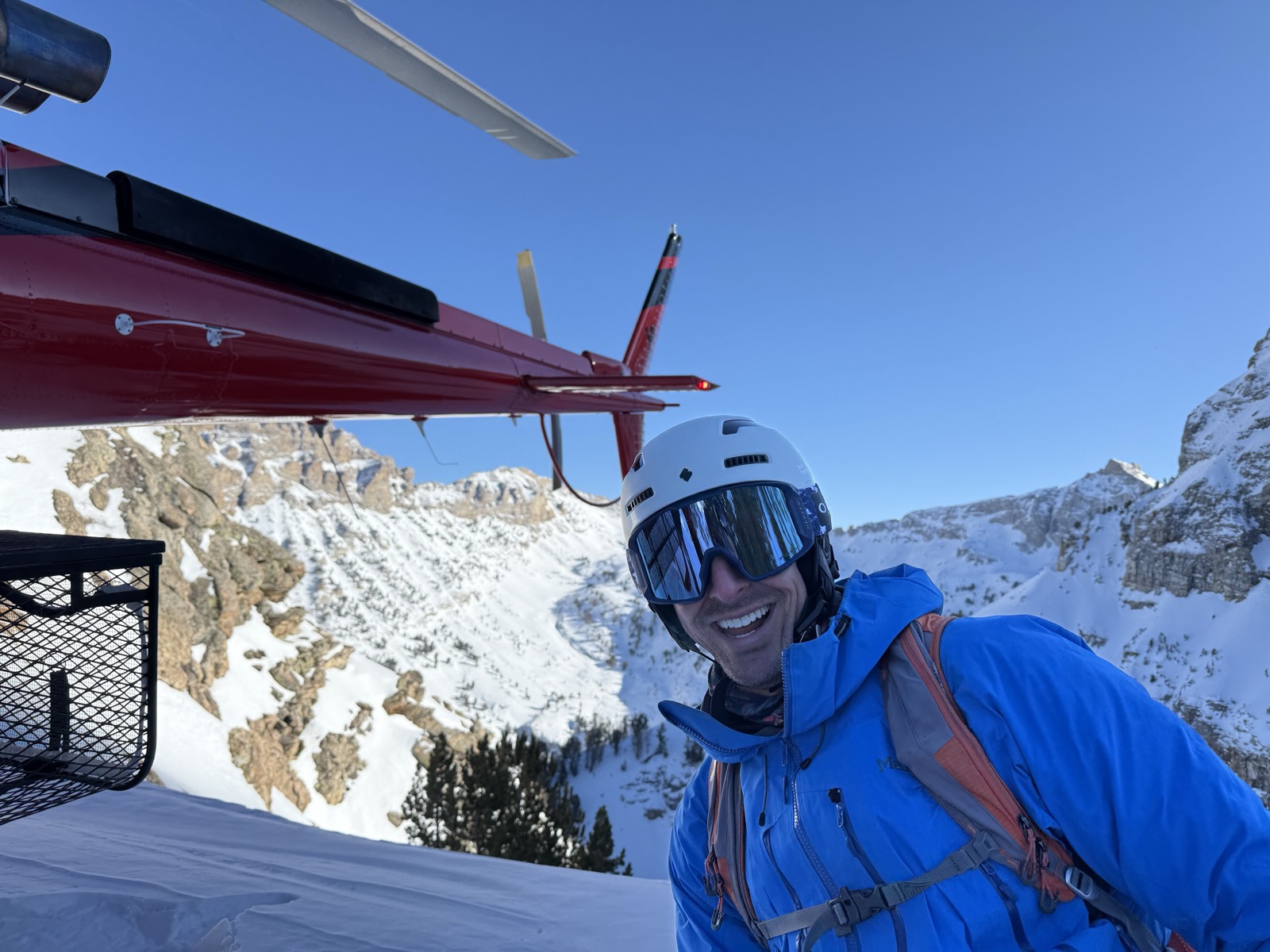
Two highlights. A heli-ski trip with a bunch of mates. And getting back on the bike after a 9-month break following a crash in 2024. One upside—I got to redesign my Baum (new pics coming).
After turning 40 I did the full battery of health checkups. This year felt more like maintenance. I’m a happy customer of Lifeforce , Dexa scans , and have worn an Oura for many years. Haven’t yet done a full-body MRI or explored TRT (or peptides), like many other men in this bracket.
It was my second (non-consecutive) year without alcohol. I had maybe 6 drinks all year, only on special events. I think this will be a long-term pattern for me. The benefits to sleep, energy, consistency, etc. have felt very real as I think about the next decade.
I’ve been learning piano for the last 2yrs, and have a 5yr goal to become a decent amateur. Made some fun progress learning songs from artists I love (like Nils Frahm, Radiohead, Mogwai), and sharing some of that here .
Saw some great live music: Portola Festival (Underworld, Caribou, Moby, Yousuke Yukimatsu), RyX, Overmono, Head and the Heart. Some fun live theater: Stereophonic, Annie, Moulin Rouge. Discovered a bunch of new music . Didn’t read enough books.
Friendships take more intention at this stage in life. I’ve landed on two modes. Showing up for the big moments, and building rhythms that don’t need deciding each time (weekly sauna, Elephants group).
Looking ahead
The last few months of 2025 felt like acceleration. Much slop has been spilled about how this will increase in the year ahead. I won’t add to that here, but will share my main theme for the year: creation > consumption.
One challenge: it’s now trivial to start things. I ended the year with dozens of threads, ideas, experiments, across multiple devices and chats. What’s harder is finishing: seeing things through to shipped, or killing an idea explicitly rather than letting it fade. In 2026 I want to get better at both: finishing > starting.